Why is My Electric Bill So High?
Heating and cooling often account for the largest share of a home's energy use, which makes it the best place to look for savings.
October 7, 2026 · 3 min read
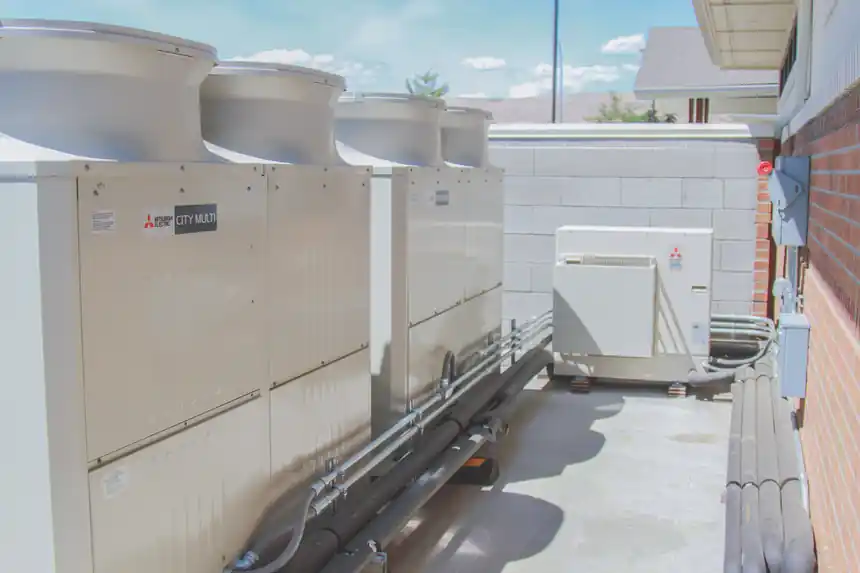
In most Washington homes, heating and cooling is the single biggest piece of the energy bill, commonly estimated at somewhere between 40 and 60 percent. That is good news in one sense: if you want to spend less, there is a clear place to start. The Tri-Cities and the Yakima Valley push equipment hard, with freezing winters, summers that regularly top 100 degrees, and spring and fall weeks that swing from morning frost to afternoon warmth. Here is what actually moves the number.
Keep the conditioned air inside
Insulation and air sealing are the foundation. A leaky, under-insulated house loses expensive heated or cooled air all year, and the older the home, the more there is to gain. Typical savings from insulating and sealing run from a few percent in a newer house to as much as 30 percent in an old one. The best order of work is usually the attic first, then the walls, then the crawlspace or basement, and finally the small leaks around outlets, doors, windows and pipe penetrations.
Set the thermostat for how you really live
The closer your indoor temperature sits to the outdoor temperature, the less your system has to work. Letting the setting drift a few degrees while you are away or asleep saves energy: roughly 4 to 6 degrees warmer in summer and 7 to 10 degrees cooler in winter. Many people find 78 degrees workable in summer for healthy adults, with a cooler setting for infants, older adults and anyone with a health condition. In winter, keep the house above 60 so pipes stay protected.
One exception: if you heat with a heat pump, avoid big overnight setbacks. When the system has to claw back a large temperature difference in the morning, it may switch on electric backup heat, which costs far more to run than the heat pump itself. A smart thermostat that recovers gradually avoids this and learns your schedule, and it can switch between heating and cooling on its own during our wide spring and fall swings.
Maintain the system, and fix the ducts
- Dirty filters and dirty evaporator or condenser coils make the system run longer for the same result
- Low refrigerant or a failing thermostat can quietly raise bills for months
- Furnace heat exchanger and venting problems affect both performance and safety
- Leaky ducts in an attic or crawlspace can waste a large share of the air your system produces
A neglected system commonly costs 10 to 15 percent more to run than a maintained one, and a seasonal inspection often catches the small problems before they become breakdowns. Ducts deserve their own look. Leaks and loose connections in unconditioned spaces can often be sealed with mastic or foil-backed tape. When ducts are crushed, badly designed or contaminated, replacement may be the better investment.
When an upgrade pays off
If the equipment is old and poorly matched to the house, new technology can make a real difference. Modern furnaces use variable-speed blowers and two-stage or modulating burners, and high-efficiency models capture heat from the exhaust so they convert nearly all of the fuel they burn into heat. Modern heat pumps hold their output better in cold weather and rely less on backup heat when they are sized correctly. Replacing an old, poorly designed system can reduce heating and cooling costs by 20 to 40 percent, depending on what you are replacing.
Not every home needs new equipment to see a drop. Many households save more by starting small: a smart thermostat, a duct sealing job and a seasonal tune-up often cost a fraction of a replacement and pay back over a few seasons. The best sequence is to fix the leaks and settings first, then judge what the equipment is actually doing, so you do not buy a bigger or fancier system to compensate for problems that a few hours of sealing would have solved.
Before you buy, ask us about current Pacific Power and Cascade Natural Gas rebates. ACT is a qualified trade ally for both, and financing is available through Synchrony, Wells Fargo or Craft3.
If your bills keep climbing and you are not sure why, ACT Heat & Air can inspect your system and tell you whether you are looking at a tune-up, a duct repair or a replacement. Call (509) 388-2997. We serve Yakima, Ellensburg, Prosser, Kennewick, Richland, Pasco and the surrounding counties.
Absolute Comfort Technology, (509) 388-2997
Call (509) 388-2997More articles
Planning for HVAC Replacement
Age matters, but repair history, energy bills and comfort tell you more about when a system has earned its retirement.
How to Size an HVAC System
An oversized or undersized system wastes energy and wears out early, so the right size comes from your house, not a rule of thumb.