How to Improve Indoor Air Quality at Home
Indoor air can carry more pollutants than the air outside, and a few targeted changes to ventilation, filtration and humidity help.
October 7, 2026 · 3 min read
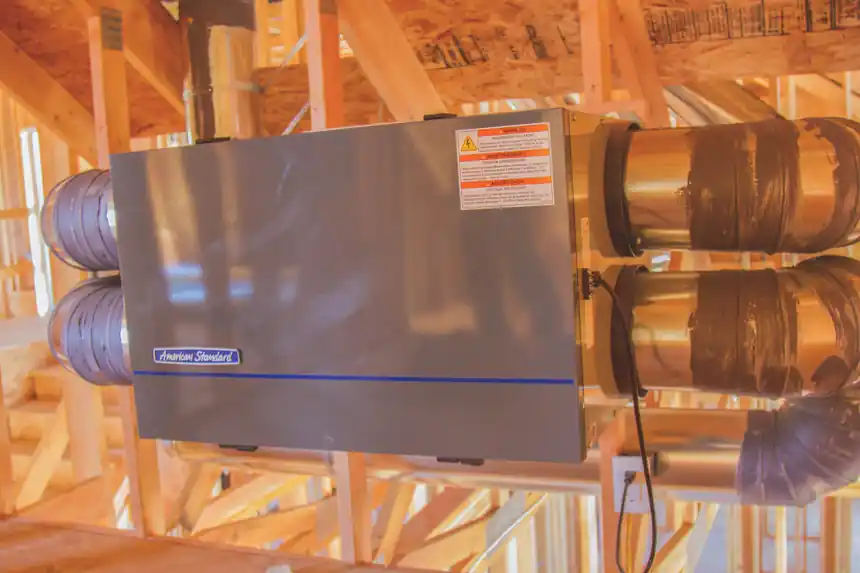
The U.S. Environmental Protection Agency has estimated that indoor air can be two to five times more polluted than outdoor air. That is a lot to take in when you consider how much of your life you spend inside, especially through a Yakima Valley winter, when windows stay shut for months. For anyone with allergies or asthma, the air in the house is not an abstract concern. It shows up as symptoms.
Signs the air in your home may be a problem
Constant sinus congestion, a runny nose, sneezing, coughing, itchy or burning eyes and headaches can all be signs of poor air quality. Several of these also have other causes, so pay attention to patterns: symptoms that ease when you leave the house, or get worse in one room, are worth investigating. Poor air quality is also not always noticeable, so improving it is a sensible step even if no one in the house is complaining.
Where the problems usually come from
- Dust and allergens: pollen, pet dander, dust mites, pest droppings and construction debris settle on surfaces and circulate through your heating and cooling system
- Smoke: tobacco, wood-burning fireplaces, candles, incense and cooking all release fine particles
- Moisture and mold: leaks and high humidity encourage fungal and microbial growth, one of the most common air quality problems in homes
- Chemical off-gassing: new flooring, furniture, paint, cleaning products and air fresheners release volatile organic compounds, which build up in tightly sealed modern houses
A newer, well-sealed house saves energy but traps whatever is produced inside it. An older house leaks more, which helps dilute pollutants but wastes energy. In both cases the heating and cooling system is the one piece of equipment that touches every room, which is why it is the most effective place to make a change.
What helps most
Start with the source. Keeping smoking outdoors may be the single most effective change a household can make, since cigarette smoke contains thousands of chemicals. Swap harsh cleaners and heavily scented products for simpler ones, and let new furnishings air out before bringing them inside.
Then look at ventilation. Fresh air dilutes pollutants, so make sure fireplaces, gas furnaces and other combustion appliances are vented properly. An energy recovery ventilator, or ERV, brings in fresh outdoor air while recovering most of the heating or cooling energy from the air it exhausts, so ventilation does not wreck your comfort or your bill. It is a good fit for tight, newer homes and for commercial buildings.
Filtration comes next. Replace your regular filter on schedule, because a clogged filter does not clean anything. If you want to go further, a whole-house filtration system or a HEPA-grade filter cleans the air that circulates through the entire house instead of one room. Add a UV germicidal light to your system and it can help limit mold, bacteria and viruses growing on the coil and spreading through the ducts.
Cooking deserves a mention. Running the range hood while you cook, and venting it outdoors rather than back into the kitchen, removes particles and moisture at the source. The same goes for bathroom fans, which should run during showers and for a while afterward. These steps cost almost nothing and take a surprising load off the filtration and dehumidification equipment downstream.
Do not forget humidity
Yakima summers are dry in the open air, but a closed-up house can still get damp, especially around bathrooms, basements, crawlspaces and any area with a past leak. Mold and dust mites both thrive in high humidity. A whole-house dehumidifier takes excess moisture out of the air, which reduces allergy triggers and makes sticky weather more comfortable. Fix leaks first, though; no piece of equipment can keep up with a wet crawlspace.
Start with a plan, not a pile of gadgets
The right combination depends on what is actually causing the problem in your house. For some homes it is a better filter and a dehumidifier. For others it is an ERV or a duct cleaning. ACT Heat & Air can look at your system and recommend what makes sense for your home or building in Yakima, Ellensburg, Union Gap, Prosser or the Tri-Cities. Call (509) 388-2997 to talk through your options.
Absolute Comfort Technology, (509) 388-2997
Call (509) 388-2997More articles
Planning for HVAC Replacement
Age matters, but repair history, energy bills and comfort tell you more about when a system has earned its retirement.
How to Size an HVAC System
An oversized or undersized system wastes energy and wears out early, so the right size comes from your house, not a rule of thumb.